

How many Ukrainians have fled their homes and where have they gone?
- By --
- Thursday, 07 Apr, 2022
Thousands of people are trying to leave eastern Ukraine ahead of an expected Russian offensive in the region.
More than ten million people are already thought to have fled their homes in Ukraine because of the invasion, according to the United Nations.
As well as the 4.2 million who have left for neighbouring countries, another 6.5 million people are thought to be displaced inside the war-torn country itself.
Where are people fleeing inside Ukraine?
Ukraine's deputy prime minister has warned people in large parts of the east of the country to evacuate while it's still possible.
Iryna Vereshchuk said people in the Kharkiv, Donetsk and Luhansk regions should try to leave now, or risk their life.
The UN's ten million figure is based on research carried out by the International Organisation for Migration (IOM) between 9 and 16 March.
Of the 2,000 internally displaced people it surveyed:
- nearly 30% had come from Kyiv, more than 36% had fled from the east of Ukraine and 20% had come from the north
- nearly 40% were now in the west of Ukraine, with less than 3% in Kyiv
- only 5% had left their homes in anticipation of the invasion, with the vast majority fleeing either at the start of the war or when it reached their area
The IOM estimates that more than half of the people who are internally displaced are women, and many are deemed particularly vulnerable because they are pregnant, have a disability or are a victim of violence.
What is being done for people fleeing inside Ukraine?
The UN, which is working alongside other organisations to provide help to people in Ukraine, says it is offering humanitarian assistance "wherever necessary and possible". This includes:
- giving cash to people for basics like food and rent
- delivering supplies from west to east, including food and tarpaulins for homes damaged by shelling
- providing folding beds to people in bomb shelters
- setting up reception and transit points for internally-displaced people
Eight buses escorted by the Red Cross have arrived in the town of Zaporizhzhia, carrying civilians who have fled Mariupol and nearby towns.
About 12 million people are thought to be stranded or unable to leave areas affected by the fighting.
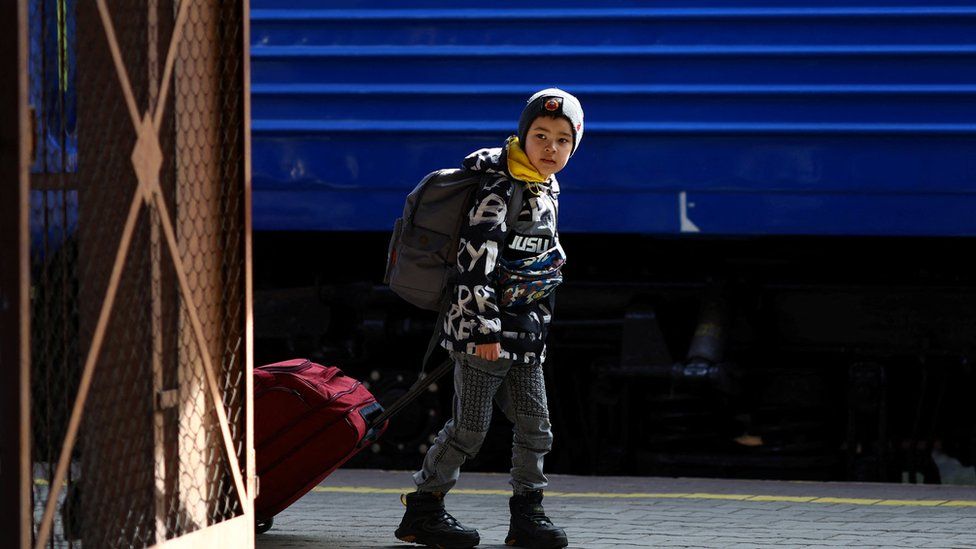
Where are Ukraine's refugees going?
Refugees are also crossing to neighbouring countries to the west, such as Poland, Romania, Slovakia, Hungary and Moldova.
The UN says that as of 5 April, more than 4.2 million people have left Ukraine:
- Poland has taken in 2,490,447 refugees
- Romania 654,825
- Moldova 399,039
- Hungary 398,932
- Russia 350,632
- Slovakia 302,417
- Belarus 17,317
Some people have travelled from Moldova into Romania and so are included in both countries' totals.
How are refugees leaving Ukraine?
Trains heading towards Ukraine's border have been packed, and there have been long queues of traffic on roads leading out of the country.
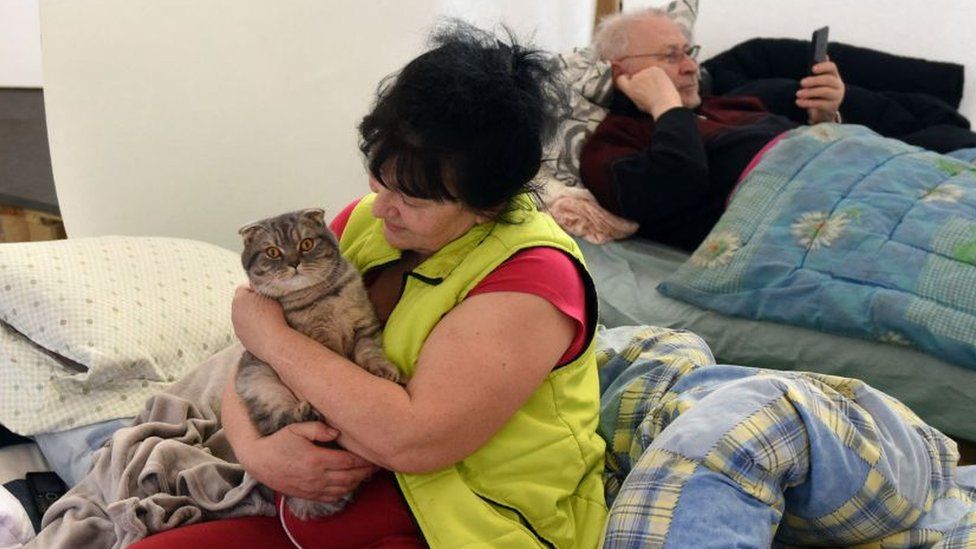 The UN estimates that 6.5 million people are displaced inside Ukraine
Refugees don't need all their official documents, but it is helpful if they can provide provide identification cards or passports, birth certificates of children travelling with them and and medical documentation.
To get refugee status, they need to be Ukrainian citizens or people legally living in Ukraine, such as foreign students.
There have been reports of people from African countries being prevented from leaving Ukraine.
- 'They said if you're black, you should walk'
What help are countries offering refugees?
In countries bordering Ukraine, refugees can stay in reception centres if they can't stay with friends or relatives. They are given food and medical care, and information about onward travel.
The EU has granted Ukrainians who flee the war a blanket right to stay and work throughout its 27 member nations for up to three years.
They will also receive social welfare and access to housing, medical treatment and schools.
Watch: The challenges of trying to raise a baby in war-torn Kyiv
The government of Poland, which has received the highest number of refugees, has said it will need more money than the EU is currently offering in order to host the number of people arriving there.
Moldova, which has by far the largest concentration of refugees per capita, has also appealed for international help in dealing with the numbers arriving.
- Couple hire hotel in Poland to house refugees
- Poland feels the strain of Ukraine's refugees
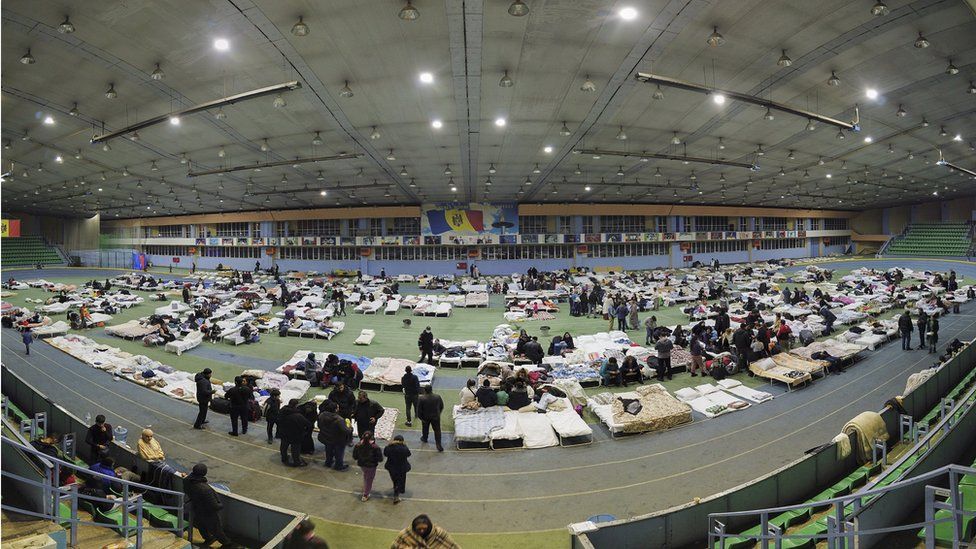 Hundreds of refugees are living in this athletics centre in Moldova
What is the UK doing to help Ukrainian refugees?
The UK launched a family visa scheme for Ukrainians who have an immediate or extended family member in the UK.
After the UK government was criticised for the speed and scale of its response, it also launched the Homes for Ukraine scheme.
Under this scheme, people in the UK can nominate an individual or family to stay with them rent-free for at least six months.
Refugees who come via the scheme will be able to live and work in the UK for up to three years, and access healthcare, welfare and schools.
Applications are made online, and both hosts and refugees will be vetted. Hosts will receive £350 a month and there will be no cap on the numbers able to come to the UK.
However, some families who have applied to be sponsors have complained that the system is too slow and complicated.
As of 31 March, 29,200 visas had been issued through both schemes, out of 65,000 applications.
- Ukraine families angered by 'inhumane' visa delay
- Heartless or doing its best to help refugees? UK in crisis mode


