
Northern Ireland: Truss to set out plans on post-Brexit trade deal
- By --
- Tuesday, 17 May, 2022
Foreign Secretary Liz Truss is to set out the UK government's strategy for changing the post-Brexit trade deal for Northern Ireland.
It comes after the PM said he did not want to scrap the deal - on how goods enter Northern Ireland from the rest of the UK - but it could be fixed.
The deal was agreed by Boris Johnson's government in 2019.
But the row over how it is implemented has created a block on forming an administration in Northern Ireland.
The Democratic Unionist Party (DUP) refuses to join power-sharing in Stormont until the Protocol is changed.
Sinn Féin said ministers were letting the DUP "hold society to ransom".
The elections for Stormont on 5 May resulted in a majority for members who support the Northern Ireland Protocol, which was designed to prevent a hard border on the island of Ireland by keeping Northern Ireland aligned with the EU single market for goods.
But the DUP are preventing an executive from forming until their objections to the deal, which introduced new checks on goods moving between Britain and Northern Ireland, are dealt with.
- What is the Northern Ireland Protocol?
- Legislative solution on NI protocol needed - PM
On Tuesday morning, Northern Ireland Secretary Brandon Lewis told the BBC "nothing is off the table" to deal with what the government sees as problems with the protocol.
He said the protocol was impacting people and businesses in Northern Ireland, adding "if we do need to legislate, we will not shy away from doing that".
When asked how the government wanted to change the protocol, Mr Lewis outlined the government idea of a "green lane", whereby certain products staying within the UK internal market are not subject to the same checks as those going to the EU.
Prime Minister Boris Johnson talks about "unnecessary barriers" on goods coming into Northern Ireland.
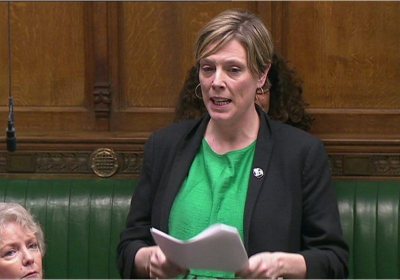
Prime Minister Boris Johnson's cabinet is due to meet on Tuesday morning before the foreign secretary makes a statement to MPs in the House of Commons.
She will set out how the government plans to change the rules on goods moving between Britain and Northern Ireland and how it could override parts of the Brexit deal.
But the government is not expected to table any draft legislation and the EU has warned of consequences if it does.
On Monday evening, Ms Truss held calls with Ireland's foreign minister, Simon Coveney, and European Commission vice-president Maros Sefcovic.
She underlined the importance of re-establishing the Northern Ireland Executive and upholding the Good Friday Agreement, which set out the rules of power-sharing in Stormont and has underpinned peace in Northern Ireland since 1998.
Mr Sefcovic said later that the UK should take advantage of "flexibilities" offered by the EU within the trade deal rather than taking unilateral action.
"With political will, practical issues arising from the implementation of the protocol in Northern Ireland can be resolved," he said on Twitter.
"Engaging with us on the flexibilities we offer would be a better course of action than a unilateral one. We're ready to play our part, as from the outset."
After meetings with Stormont's five main parties on Monday, Mr Johnson said the UK government would be going ahead with legislation to change the trade rules.
He said: "We would love this to be done in a consensual way with our friends and partners, ironing out the problems, stopping some of these barriers east-west.
"But to get that done, to have the insurance we need, we need to proceed with a legislative solution at the same time."
The basics
- The Northern Ireland Protocol is part of the Brexit deal: It means goods can pass freely between Northern Ireland (in the UK) and the Republic of Ireland (in the European Union)
- Basically, lorries don't have to stop and prove their goods follow EU rules when they cross the border
- Instead, checks are done when goods arrive in Northern Ireland from the rest of the UK (England, Scotland, Wales)
- The border is a sensitive issue because of Northern Ireland's violent past and politicians do not want new checkpoints there
- But the protocol is unpopular with unionist politicians (who support Northern Ireland being part of the UK). They say it means Northern Ireland is treated differently from England, Scotland and Wales
- The UK government has hinted that it could drop parts of the protocol, but the EU says it could retaliate