Further west, lower vaccination rates are also to be found in countries and regions with either popular or voluble populist or extremist movements, as in Germany, Austria and Northern Italy.
In a paper published by the journal Psychological Medicine in October, Michele Roccato and Silvia Russo from the University of Turin argue that their study shows "people with a populist orientation tend to refuse the Covid-19 vaccine, in line with previous research showing that vaccine refusal is often politicized, but that its politicization is not limited to the traditional left-right cleavage."
Sophie Tissier, who organizes protests against Covid-19 restrictions and vaccines in France, says that these protests have created a new political force that is radical but goes beyond party political lines.
She says her group seeks to "create a citizens' opposition which is beyond electoral considerations and much more like a watchdog that sits outside the world of politics to be able to tell it: 'Look here, you are no longer protecting our rights, you are no longer protecting our rights under the law.'"
In August, more than 230,000 people took to the streets across the country in one day after France became one of the first European countries to announce the use of relatively strict vaccine passes.
"It really set things alight because people realized that life as it was, was coming to an end," she said. "People would no longer be free, or able to go out as they did."
Since then, protests have tapered off in France, partly because no mainstream party has been openly encouraging its supporters to join them. France's vaccine rates are among the highest in Europe, suggesting that even in countries where there is strong vaccine hesitancy -- as there was in France even before the pandemic -- far-right or populist parties' stance on the vaccine can have an impact.
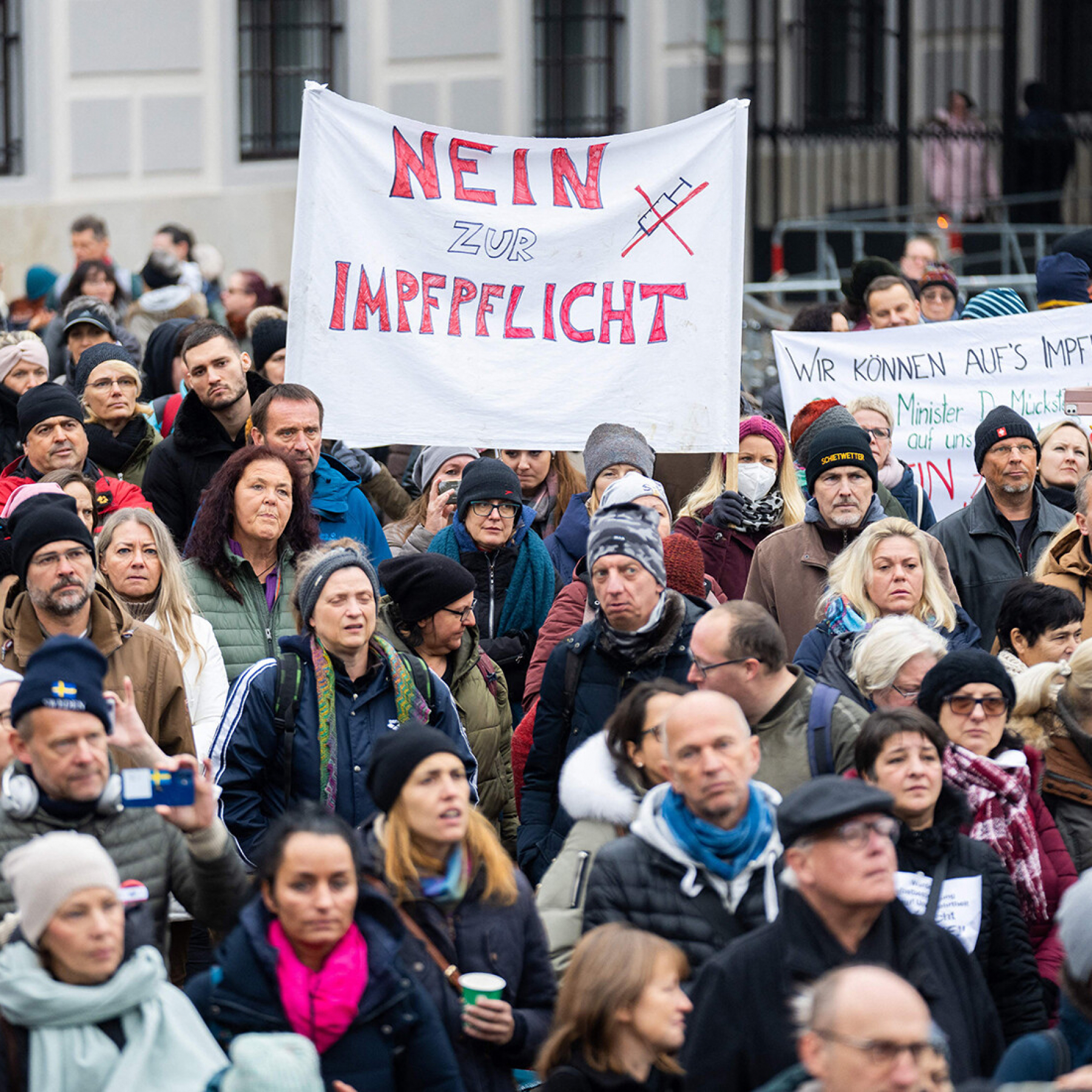
Elsewhere in Europe, such groups are clearly fanning the anti-vaccination flames. In Austria, several protests planned since the government announced its nationwide vaccine mandate last month have been planned by the far-right Freedom Party.
The mandate is due to come into force in February 2022.
Even as he announced the move, Schallenberg accused the Freedom Party of being responsible for the country's low vaccination rates and of having stirred up vaccine hesitancy.
"We have too many political forces in this country that are fighting against [vaccination] vehemently, massively and publicly. That is irresponsible," Schallenberg said, adding: "Incited by these radical opponents of vaccination, by specious fake news, unfortunately too many of us have not been vaccinated. The consequence is overcrowded intensive care units and enormous human suffering."
In other European countries, populist parties have also jumped on the bandwagon.
And the divide in opinion over pandemic measures is no longer about extreme left and extreme right, said French political scientist Jean-Yves Camus, but "between the mainstream and the periphery."
"It's much more about the extreme," Camus said. "The most extreme fringe groups taking advantage of the pandemic to say: 'This virus is fake, there is no pandemic and you are being tricked by your governments. It's a worldwide conspiracy of your national governments. They are using the pandemic to infringe on your individual rights and using vaccination passes to have your personal data,' and so on."
In parts of Eastern Europe, but also in and around Germany -- from Northern Italy to the Netherlands and Austria -- parties which once focused on immigration or Europe have been tapping into the widespread anger of those opposed to vaccines and Covid-19 restrictions, shifting their attention to an issue far more likely to appeal to the apolitical and to cut across traditional party political lines.
Their new enemy is far more federating: The Covid-19 measures and vaccination campaigns that they say threaten their freedom.
Vaccine mandates
The World Health Organization has cautioned against vaccine mandates, because of their potential impact on public confidence and public trust. Dr Hans Kluge, WHO's Europe Director, said they should be used as "an absolute last resort, and only applicable when all other feasible options to improve vaccine uptake have been exhausted."
In a part of the world where the fight against the pandemic has already been hampered by vaccine hesitancy, such mandates could fuel more resistance.
"The worry is that anti-vaxxers could come to hold even more extreme positions," said Russo, of the University of Turin. "That's one risk. But we should also consider that where vaccines become mandatory, there will need to be controls and that could further undermine institutional trust. "
In other words, forced vaccination might push people into vaccination centers but it will also drive some of them to the streets, confirming and further fueling their deeply held suspicion of "the system."
The fight against the pandemic may one day come to an end, but the fight against populism in Europe could be just beginning.